

Embracing Change: Navigating the Future of the Media Industry through Evolution. Written By Scott Roulet, Co-Founder At Edisource
The media industry has undergone significant changes over the past few decades, driven by technological advancements and shifting consumer preferences. From the rise of digital media to the emergence of artificial intelligence, media companies have had to adapt to new challenges and opportunities in order to remain competitive. While this period of evolution has been marked by both success and failure, there are valuable lessons to be learned from the strategies that have worked and the missteps that have led to decline.
The Business of Media 2000-2025
Digital Media
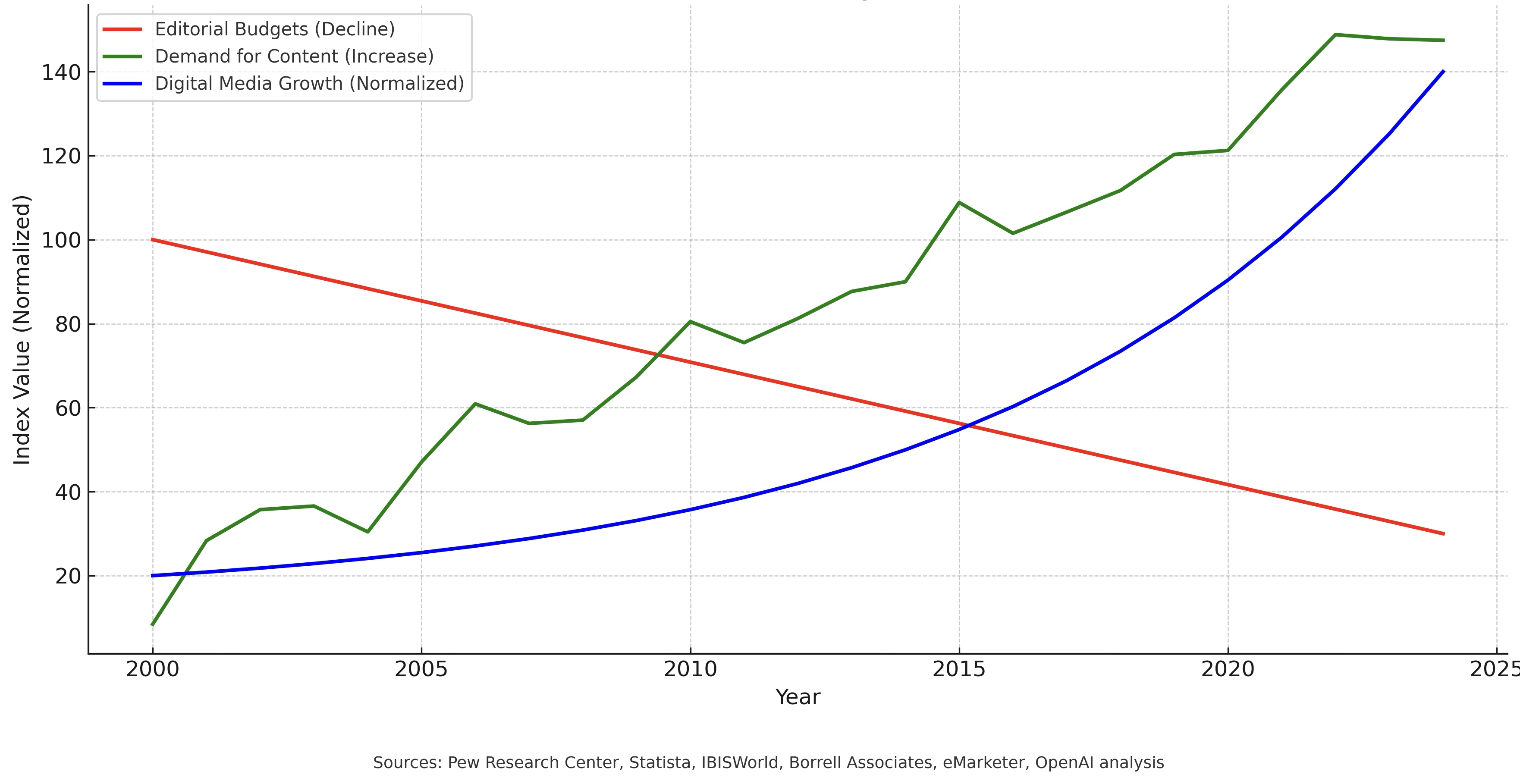
The rise of digital media didn’t just disrupt the media industry—it rewrote its business model. In the late 1990s, many legacy publishers underestimated the internet’s long-term potential, delaying investments in digital platforms and ceding early ground to agile, digital-native competitors. As digital advertising eclipsed traditional revenue streams, the imbalance grew starker: by 2024, global ad spend is projected to reach $1.08 trillion, with 43.6% of that controlled by just three tech giants—Meta, Amazon, and Alphabet—a share expected to climb to 46% by 2026. The result has been a massive redistribution of value away from content creators and toward digital intermediaries. Those publishers that endured this transformation did so by embracing digital-first models, investing in subscriptions, and diversifying revenue to reduce dependence on programmatic ad ecosystems they no longer controlled.
Programmatic Advertising
As publishers scrambled to adapt to the dominance of digital platforms, they were soon met with a second wave of disruption—one that would further erode control over their own monetization: the rise of programmatic advertising in the 2010s. Promising efficiency and scale, programmatic quickly became the default infrastructure for buying and selling digital ads—but it came with unintended consequences.
Artificial Intelligence
Now, the media industry is bracing for its next inflection point: the rapid rise of artificial intelligence. With the global AI market projected to reach $312.4 billion by 2027, the potential for transformation is massive touching everything from content creation and personalization to audience targeting and operational efficiency. But this wave brings as many risks as rewards. Publishers must not only navigate the ethical and legal complexities of AI adoption but also contend with resource constraints, workforce readiness, and growing concerns around misinformation and content authenticity. Those that succeed will be the ones that treat AI not just as a tool for cost-cutting, but as a strategic capability that reinforces trust, relevance, and long-term sustainability.
The Road Ahead
The media industry has weathered decades of disruption by adapting to each wave of change—often under pressure, but always with a commitment to credibility and service. As AI introduces both powerful tools and unfamiliar risks, the path forward will depend on the industry's ability to set shared guardrails that support innovation without compromising trust. The Alliance for Audited Media certification program is an important first step to create frameworks that can guide adoption. Highly respected trade groups like the Software and Information Industry Association are also well positioned to form collaborative working groups to establish recommended guidelines for its members of B2B media, information and events companies. By establishing baseline standards now—before usage becomes too fragmented—publishers can ensure AI innovation becomes an asset to enhance their editorial mission, not a liability that undermines them. These early efforts won’t be perfect, but they represent the kind of collective action that will allow AI to scale effectively, sustainably, and with integrity.
Tactical Adoption for Strategic Outcomes
While general-purpose language models are widely available, adapting them to specific professional workflows often burns more time than it saves. GenAI flips that script. Purpose-built platforms like Edisource are designed around the daily realities of media teams, offering pre-configured templates and prompts tailored to their needs. Instead of engineering complex instructions, users simply refine what’s already aligned with their workflow. That’s the power of endemic GenAI: it delivers efficiency out of the box, with built-in checks and balances professionals can trust.
Inflection Point
The opportunities ahead are enormous, yet subtle crossroads will determine your business’s resilience and your brand’s trust. For media professionals, this is the moment to put AI to work—thoughtfully and collaboratively. Charging ahead in isolation risks wasted effort at best and lasting damage to credibility at worst. But ignoring it isn’t a neutral choice—it’s a fast track to irrelevance.

